
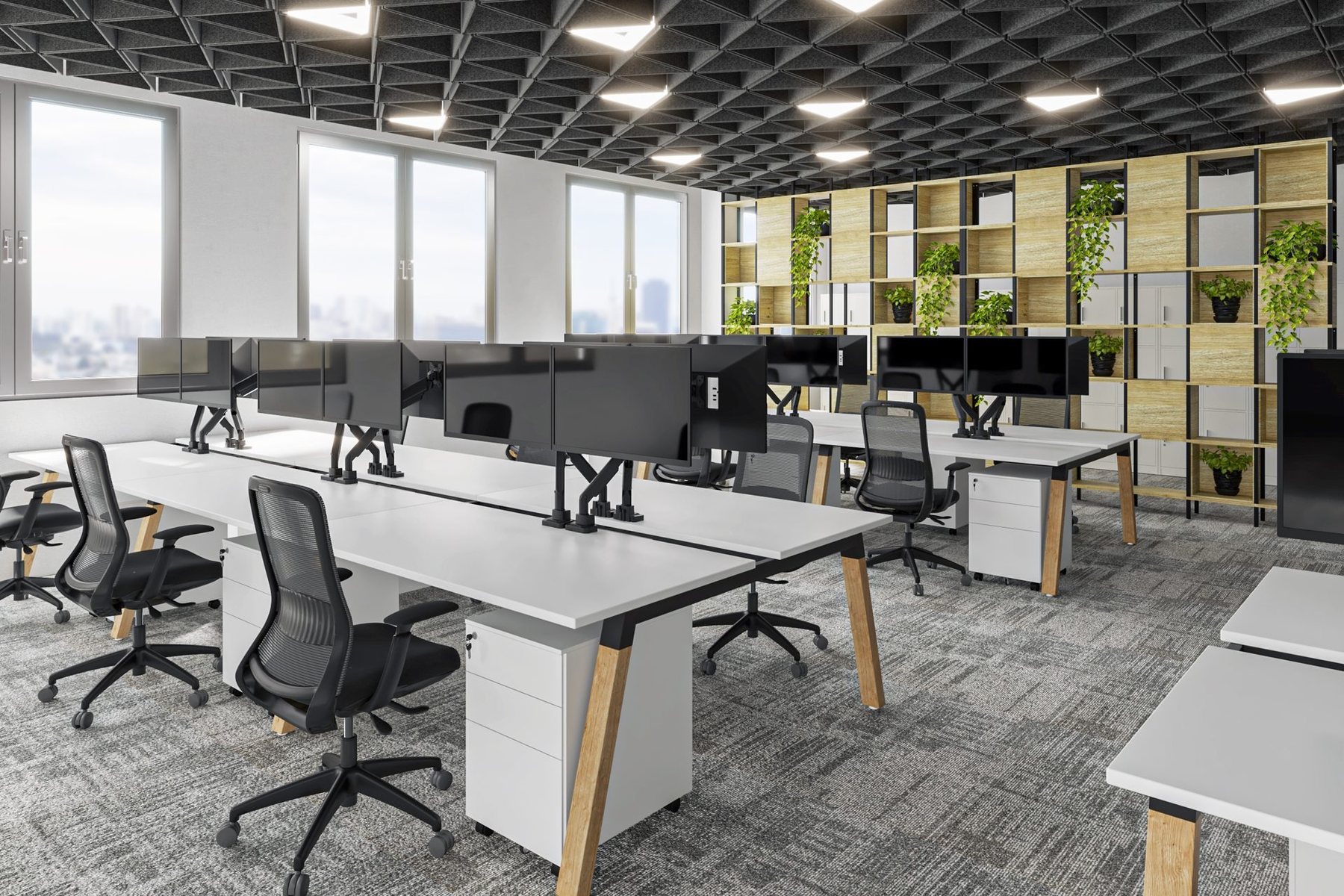
Product InsightsLegacy Commercial Furniture7 November 2026
Most office layouts come down to one choice. Do you give each person a corner of their own, or seat people in facing pairs and clusters? Both work. They solve different problems, and the right answer depends on who sits there, what they do all day, and the shape of your floor.
Here is how each one works, where each fits best, and how to decide.
What a Corner Workstation Does Well
A corner workstation is an L-shaped desk. The screen sits in the corner, and the worktop runs out either side. Each person gets more usable surface than a straight desk takes up.
Our 90° corner desks, for example, have an 1800 × 1800 mm worktop. Our 120° workstations are 1200 × 1200 mm and are designed to sit in clusters. Both come as fixed-height desks (715 mm high) and as electric sit-stand desks.
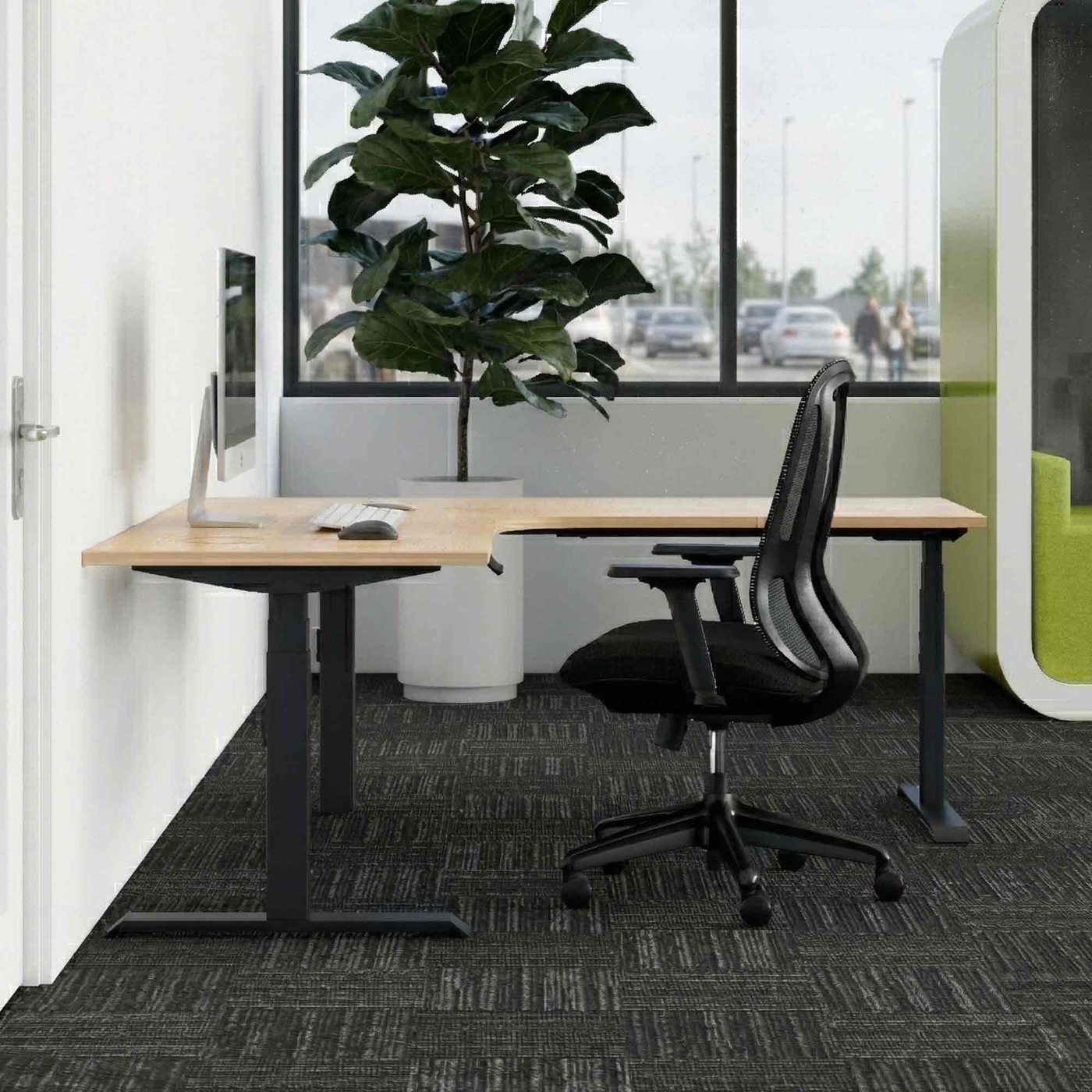
Corner desks suit people who:
- need room for a screen, paperwork and a second work surface at once, such as finance, design, estimating and project roles;
- want a feeling of their own space, even in an open-plan floor;
- work on calls or detailed tasks where being faced away from neighbours helps.
The trade-off is floor area. An L-shaped desk takes up a larger square of the floor than a straight desk, so a given room fits fewer of them.
What Back-to-Back Desks Do Well
Back-to-back desks seat people in facing pairs, fours, sixes or eights. Each side has its own worktop.
Our back-to-back desks come as fixed-height pairs and clusters for 2, 4, 6 or 8 people, and as electric sit-stand pairs where each side adjusts on its own frame.
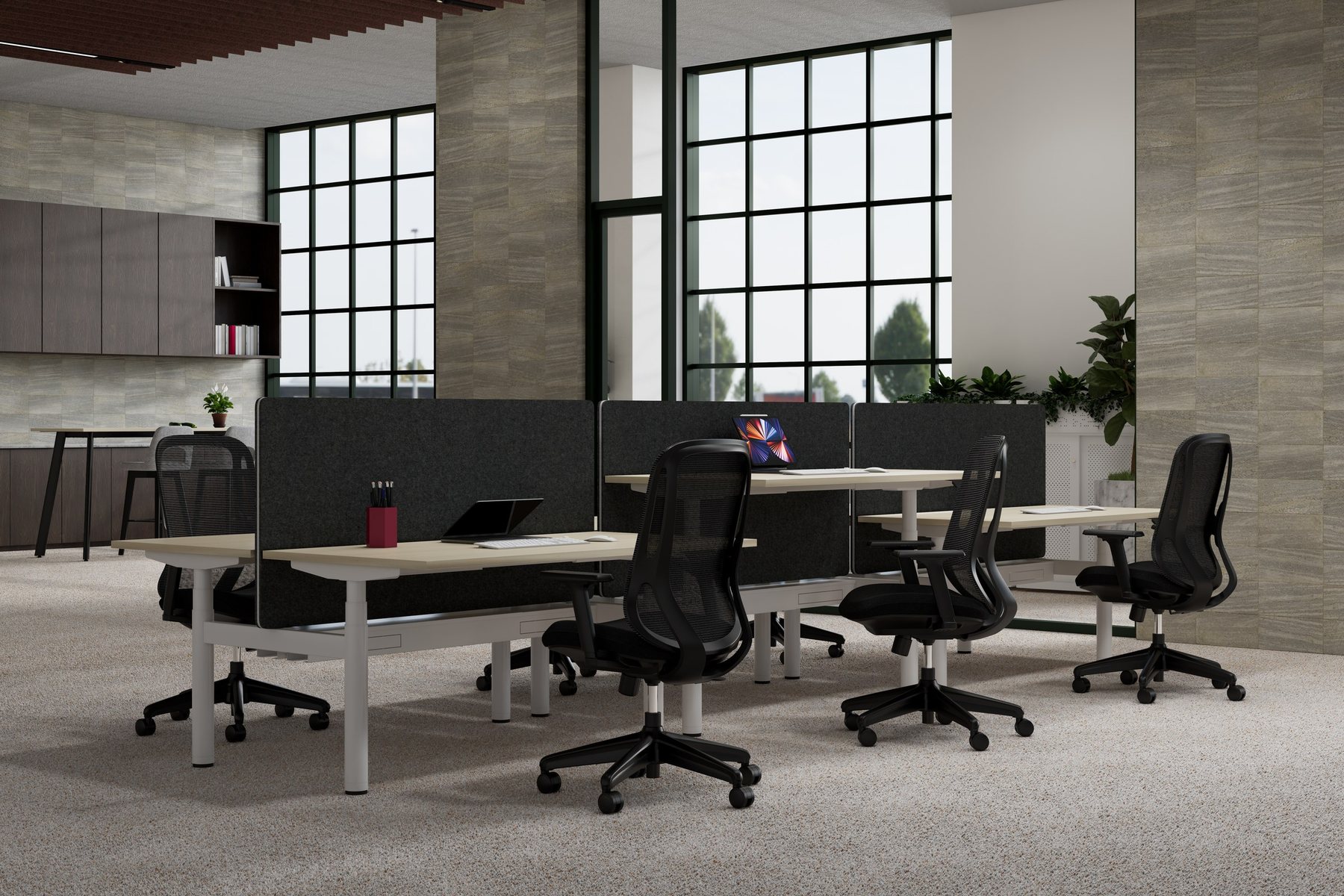
Back-to-back suits teams who:
- work together all day and talk often, such as sales, support and operations teams;
- sit in larger groups where fitting more people into the floor area matters;
- want a simple, repeatable layout that is easy to add to later.
The trade-off is privacy and personal space. People face each other, so noise and eye contact carry. A desk-mounted acoustic screen between the two sides is the usual fix.
Corner vs Back-to-Back at a Glance
| Corner workstation | Back-to-back desks | |
|---|---|---|
| Surface per person | More: an L-shaped worktop | Less: one straight worktop per side |
| People per floor area | Fewer | More |
| Sense of own space | Stronger | Shared |
| Team talk and collaboration | Lower | Higher |
| Noise carries | Less | More, unless screens are fitted |
| Typical sizes on our range | 90°: 1800 × 1800 mm. 120°: 1200 × 1200 mm | Pairs and clusters of 2, 4, 6 or 8 |
| Height options | Fixed (715 mm) or electric sit-stand | Fixed (715 mm) or electric sit-stand |
How to Choose: Four Questions
1. What does each person actually do? List the roles. People who spread out with paperwork, large drawings or several screens usually do better with a corner desk. People who mostly work on one or two screens and talk to colleagues usually do fine on back-to-back.
2. How does the team work together? If the team works shoulder to shoulder, back-to-back keeps them close. If they need to concentrate, corners and screens give them room to.
3. What shape is the floor? Corner desks sit well against walls and in room corners, and they fill awkward angles. Back-to-back runs best down the middle of a regular floor. Measure the room before you pick, and mark the desk shapes on the plan.
4. How much room do you need around them? Whichever layout you choose, plan clear walkways and exit paths between the desks. The requirements depend on the building and how many people use the floor, so check them with your building certifier or fire engineer before you finalise a layout. We plan around them, and we can mark them on the plan.
Can You Mix Them?
Yes, and many offices do. A common pattern is back-to-back clusters in the middle of the floor for teams who work together, and corner workstations along the walls and corners for roles that need more room.
You can also choose sit-stand frames for some desks and fixed-height for others. Each side of a back-to-back pair adjusts independently on the electric models, so one person can stand while the other sits.
Sit-Stand or Fixed Height?
Both layouts come in both. Fixed-height desks cost less and suit spaces where nobody needs to adjust. Electric sit-stand desks let each person change position through the day. The best choice depends on your team and budget. Our guide to are standing desks good for you covers what Australian guidance says about sitting less.
Where to See the Options
- Corner and L-shaped desks: the full corner range.
- Fixed height corner and sit-to-stand corner desks.
- Fixed height back-to-back and sit-to-stand back-to-back desks.
Not sure which layout suits your team? Give us a call. We can lay out both options on your floor plan, or come out to your site, measure up and show you how each one fits. Contact Legacy Commercial Furniture.
Frequently asked questions
What is a corner workstation?
A corner workstation is an L-shaped desk with the screen in the corner and the worktop running out either side. It gives each person more usable surface than a straight desk. Legacy's 90° corner desks have an 1800 × 1800 mm worktop.
What is a back-to-back desk layout?
Back-to-back desks seat people in facing pairs, fours, sixes or eights, with each side having its own worktop. They fit more people into a given floor area, and suit teams that work closely together.
Which is better for an open-plan office, corner or back-to-back?
It depends on the team. Back-to-back suits teams who collaborate and fit more people per floor area. Corner workstations give each person more surface and a stronger sense of their own space, but take up more floor. Many offices mix both.
Can corner and back-to-back desks both be sit-stand?
Yes. Both layouts come in fixed-height (715 mm) and electric sit-stand versions. On electric back-to-back desks, each side adjusts independently.
Planning a fitout?
Every project is different — and the best advice comes from a direct conversation. If you're working through scope, timing, or budget, get in touch.
Get in Touch